
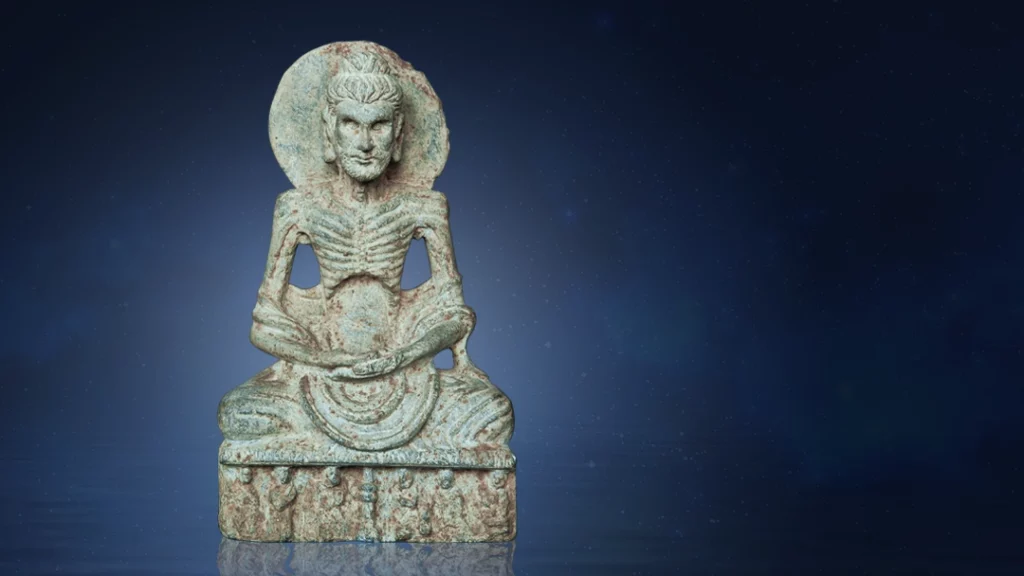
This stone sculpture of Sakyamuni Buddha from the Gandhara era has a history of about 1,900 years. Buddha appears serene, despite his deep-set eyes and overexposed spine. With a wavy bun on his head, the Buddha sits cross-legged on a throne, his hands placed in a meditative position. The radiance behind the statue’s head symbolizes the Buddha’s wisdom and composure.
It is said that the Buddha, to discover the way of liberation, ate only one grain of rice daily for the purpose of sharpening his body and mind. After six years of meditation practices, he realized that harsh practices alone would not lead him to liberation, so he sat under the Bodhi tree and vowed to remain there until he achieved enlightenment. Finally, he became the Buddha.
This statue depicts the perseverance of Sakyamuni Buddha accurately and vividly, so that future generations can truly appreciate the hardships that he went through to realize his illuminated consciousness. It is thanks to Sakyamuni Buddha’s firm belief in the way of liberation that he finally attained ultimate enlightenment.