
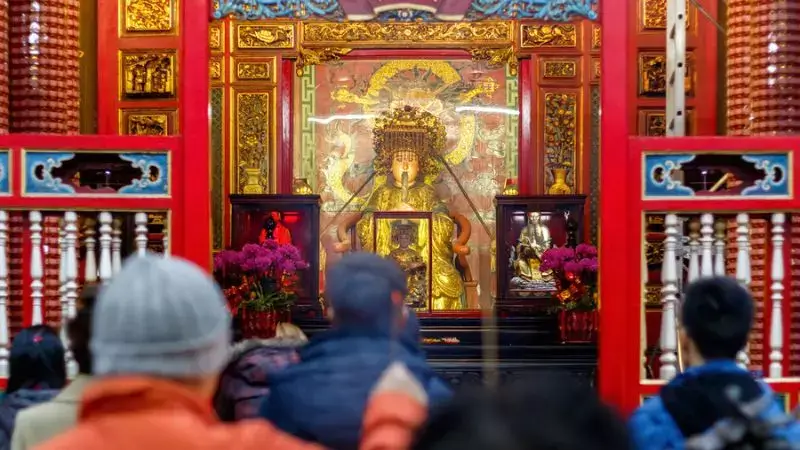
The Mazu pilgrimage is a grand religious event in Taiwan, known for its long history and rich cultural heritage. Every year, during Mazu’s birthday, Mazu temples across Taiwan hold magnificent pilgrimage processions, attracting numerous devoted followers. This activity not only showcases the believers’ admiration and gratitude toward Mazu, the Heavenly Mother, but also serves as a way to pray for her blessings—bringing peace to families and success in careers. This article delves into the origin and meaning of the Mazu pilgrimage, allowing you to experience the sincerity and historical tradition embedded in this religious ritual.
What Is the Origin of the Mazu Pilgrimage? Understanding Its Cultural Roots
The Mazu pilgrimage is one of the most representative cultural activities in Taiwan’s folk beliefs. Its origin can be traced back to traditional beliefs in coastal regions of China. According to legend, Mazu is the guardian deity of seafarers. In the past, immigrants and fishermen would devoutly pray to Mazu for safety before heading out to sea. As Minnan immigrants crossed the ocean to Taiwan, the Mazu belief took root and gradually became one of the most prevalent and influential faiths on the island.
To express their gratitude for Mazu’s protection, believers hold pilgrimage rituals to show respect and appreciation, and to pray for favorable weather and national peace. Around Mazu’s birthday (the 23rd day of the 3rd lunar month), major Mazu temples across Taiwan conduct grand incense-offering and pilgrimage activities. Tens of thousands of believers participate with sincerity, praying for safety and success. The cultural value of the Mazu pilgrimage is highly respected in Taiwanese society. It has even been listed by UNESCO as part of the “Intangible Cultural Heritage of Humanity”, making it a treasured gem of Taiwanese folk religious culture.
Why Does Mazu Go on Pilgrimage? The Reasons and Meanings Behind the Ritual
The Mazu pilgrimage is not only a deeply meaningful religious ritual, but also carries profound cultural and symbolic significance. From a religious perspective, the core of the pilgrimage lies in the ritual of “paying homage to the ancestral temple and receiving incense fire.” Folk beliefs hold that a deity statue’s spiritual power weakens over time, thus requiring a visit back to the ancestral or mother temple to receive incense fire, thereby renewing the deity’s divine energy and continuing its protection.
In addition, the Mazu pilgrimage has a social function of uniting people and fostering emotional connections. Regardless of gender or age, all participants walk alongside Mazu, expressing their gratitude through action and praying for personal and family well-being. Although everyone’s motivation for participating may differ, their shared faith creates mutual support and unity. This makes the pilgrimage a vital bridge for emotional bonding among followers. As such, the meaning of the Mazu pilgrimage transcends ordinary religious activity, allowing people to draw strength from their faith, release pressure, and welcome life’s challenges with renewed energy.
How Is the Incense-Offering Activity Different? Overview of Mazu Pilgrimages Worldwide
In the Mazu pilgrimage, “pilgrimage” and “incense-offering” differ in essence and function. Pilgrimage refers to a deity’s routine inspection of its jurisdiction—a local and regular ritual meant to ward off evil, maintain community harmony, and bring peace and blessings to the people.
Incense-offering, on the other hand, is more like a social visit between deities. Believers escort their deity to visit other temples, strengthening divine and human relationships and promoting interfaith and interpersonal connections across regions.
Mazu pilgrimage events are not limited to Taiwan—similar rituals exist in other countries as well. Below is an introduction to Mazu pilgrimages around the world:
Mazu Pilgrimages in Taiwan
Mazu pilgrimages in Taiwan are considered one of the “Three Great Religious Events of the World.” Various regions host distinctive events. For example:
The Baishatun Mazu Pilgrimage from Gongtian Temple in Tongxiao, Miaoli is known for having the longest walking route.
The Dajia Mazu Pilgrimage from Jenn Lann Temple in Taichung is famous for its massive scale.
The Beigang Chaotian Temple Pilgrimage in Yunlin impresses with its grand and awe-inspiring momentum.
The Mazu Sea Pilgrimage in Penghu is especially unique for its maritime route.
Taking Taiwan’s largest Mazu pilgrimage—the Dajia Jenn Lann Temple’s incense-offering pilgrimage—as an example:
This event spans nine days and eight nights, covering 340 kilometers round trip across four counties: Taichung, Changhua, Yunlin, and Chiayi. The preparations and rituals begin as early as the Lantern Festival and follow ten key traditional ceremonies: Divination Blocks, Flag Raising, Peace Prayers, Lifting the Palanquin, Departure, Stationing, Blessings, Birthday Celebration, Return, and Repositioning the Statue.
Mazu Pilgrimage in Japan
In Japan, Mazu is commonly referred to as “Tenpi” or “Nyanma”, and is syncretized with local deities. Particularly in areas like Mito Domain in Honshu, Satsuma Domain in Kyushu, and among coastal shipping communities, Mazu is revered as an important guardian of the sea.
In Oma Town, Aomori Prefecture—a fishing village—the Mazu belief has a long history. It is best known for its annual pilgrimage on Marine Day in July.
Oma Town’s Tenpi Nyanma Pilgrimage blends Japanese and Taiwanese ritual traditions. The procession includes Japanese Kagura music and divine palanquins, led by local shrine priests, followers, and fishermen. Dragon dance performances add to its unique cultural flair. Highlights include the Big Catch Prayer Festival and the Sacred Talisman to the Sea ritual, in which priests cast prayer slips into the sea to bless the fishing industry. Then, boats carrying the kagura and palanquins sail into the sea, symbolizing reverence and gratitude toward Mazu. The event concludes with a return to Inari Shrine and a mochi-throwing celebration, bringing the pilgrimage to a joyful end.
Mazu Pilgrimage in Singapore
At Thian Hock Keng Temple in Singapore, a grand pilgrimage ritual is held annually on Mazu’s birthday (the 23rd day of the 3rd lunar month) to honor the Mazu faith and pray for national peace and prosperity.
The procession begins at Thian Hock Keng Temple, marked by solemn drumming and gong performances. A grand ceremonial guard departs with great momentum, drawing nearly a thousand believers to accompany the journey.
The procession then travels by vehicle to Marina South Pier, where a sea inspection ceremony is held, symbolizing Mazu’s protection over maritime safety.
Upon Mazu’s return, followers participate in the Peace Bridge Ceremony led by a Taoist priest, symbolizing disaster elimination, fortune enhancement, and blessings of health and longevity.
Thian Hock Keng’s Mazu pilgrimage not only demonstrates the deep devotion of Singapore’s residents but has also become an important annual cultural event within the Chinese community—rich in tradition and blessings.
Reminder from Grandmaster JinBodhi: A Sincere Heart Will Receive Infinite Protection from the Divine
On the path of faith, Grandmaster JinBodhi always emphasizes: Only with sincerity can one resonate with the divine. When we carry sincerity in our hearts—toward deities, others, and ourselves—we build a profound connection with the universe. Such sincerity not only touches the heavens and the earth, but
also brings infinite blessings and protection from gods and Buddhas, safeguarding our life, career, health, and inner peace. The power of faith is built on this benevolent and heartfelt interaction.
If you’re interested in more spiritual stories or wisdom, subscribe to Grandmaster JinBodhi’s YouTube channel and follow his Facebook page, where you’ll regularly find fascinating and meaningful topics. Explore life’s deeper wisdom together with the Grandmaster.
Further Reading: