
In the vast desert of southern Peru lies an ancient and mysterious wonder—the Nazca Lines. These enormous geoglyphs, visible only from the air, depict various animals and plants such as birds, monkeys, spiders, and cacti. Their existence challenges our understanding of ancient civilizations, sparking numerous speculations about their creation, purpose, and potential connection to aliens. This article will take you on a journey to explore the secrets of the Nazca Lines and uncover the stories behind these astonishing patterns.
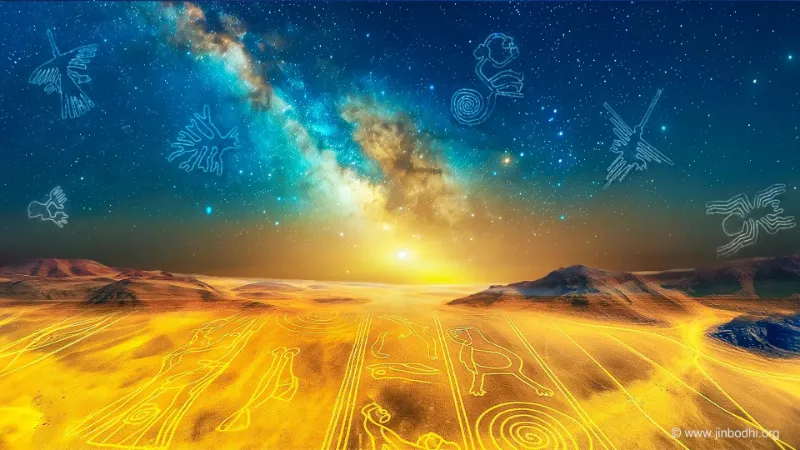
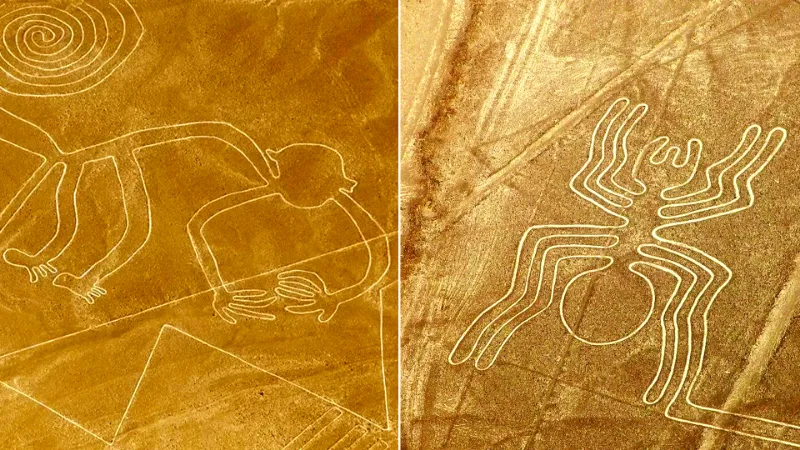
Image Source:rainforestcruises.com
What Are the Mysterious Nazca Lines? An Introduction to the Ancient Nazca Civilization
The Nazca Lines, located in the Sechura Desert in southern Peru, are a series of giant geoglyphs made up of hundreds of straight lines, geometric shapes, and animal and plant figures, including hummingbirds, monkeys, spiders, whales, and herons, resembling a natural art gallery. The Nazca Lines stretch across approximately 450 square kilometers, starting from the Ingenio River in the north to the Nazca River in the south, located about 400 kilometers south of Peru’s capital, Lima. The largest figures are hundreds of meters long.
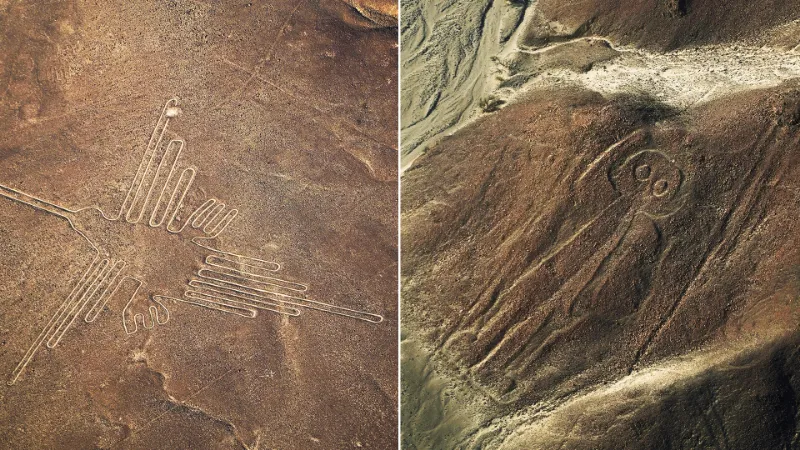
Image Source:unsplash.com
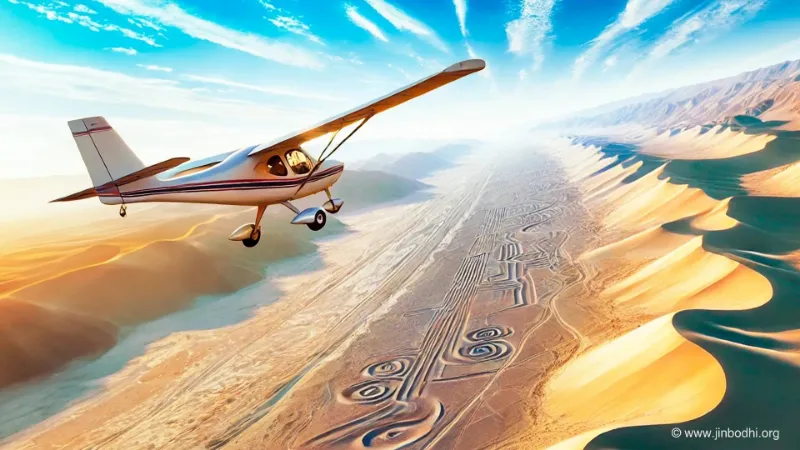
In 1939, American archaeologist Dr. Paul Kosok discovered the Nazca Lines while flying over the area in search of ancient Inca irrigation systems. Due to their vast size, these geoglyphs can only be fully appreciated from hundreds of meters above the ground, as seen from the plane. Experts estimate the Nazca Lines were created around 200 BCE, though they may be even older. These mysterious geoglyphs belong to the ancient Nazca civilization, dating back over 2,000 years, and still retain their original form and astonishing detail.
In 1994, UNESCO designated the Nazca Lines as a World Heritage Site, under the name “Lines and Geoglyphs of Nasca and Palpa.” With advances in technology and ongoing archaeological research, new Nazca Line patterns are continually being discovered. The scale and diversity of the Nazca Lines make them a focal point of interest for archaeologists and tourists alike, increasing our awe and curiosity about these mysterious geoglyphs.
Exploring the Formation of the Nazca Lines, The Craftsmanship Behind the Geoglyphs
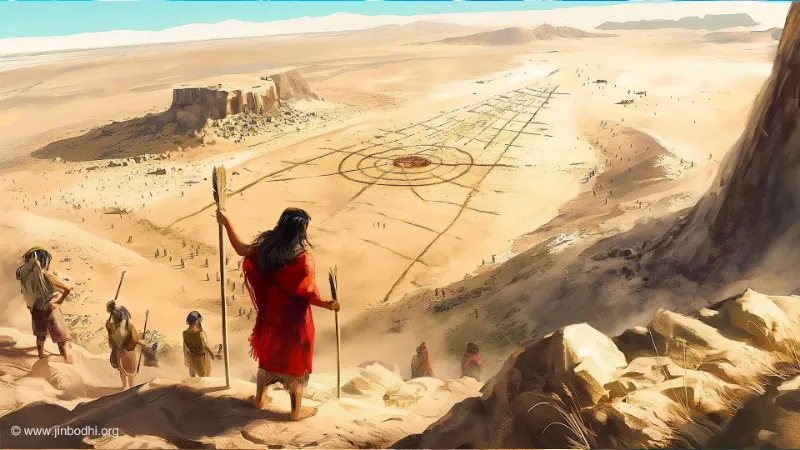
The formation of such a vast number of large-scale Nazca Lines remains a subject of debate among experts, with no definitive answers yet. However, as speculations evolve, experts have reached a consensus on the likely methods used to create these lines. Most researchers believe that the process involved marking out the boundaries first, with important points indicated by large stones. The red-brown gravel and soil along the lines were then removed and piled up on the sides. Depending on the thickness of the lines, more gravel was cleared from the lines and piled on the sides, revealing the lighter-colored ground underneath, thus creating a contrast in color and forming these patterns.
The preservation of these patterns for thousands of years can be attributed to the dry climate and stable environment of the area. The Nazca Desert features an extremely arid climate with very little rainfall each year, relatively mild winds, and barren land where hardly any vegetation grows. This isolation has allowed the geoglyphs to remain intact, without erosion or weathering, for centuries.
What Are the Functions of the Nazca Lines?
The Nazca Lines are one of the most captivating archaeological mysteries in history, with various scholars and experts proposing different theories regarding their purpose.
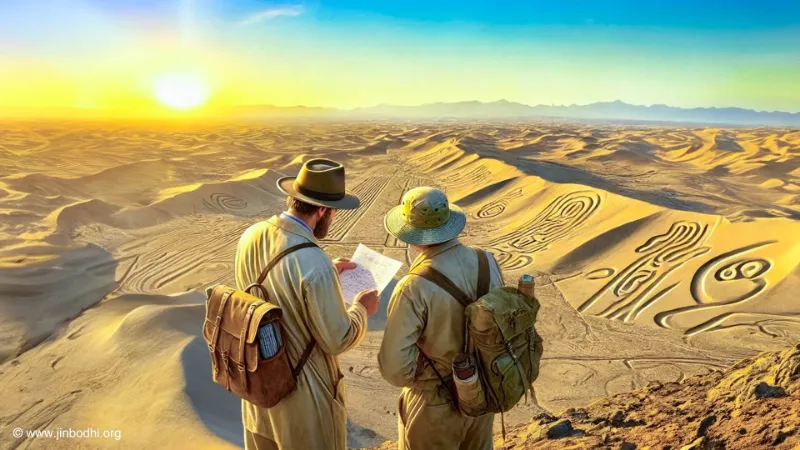
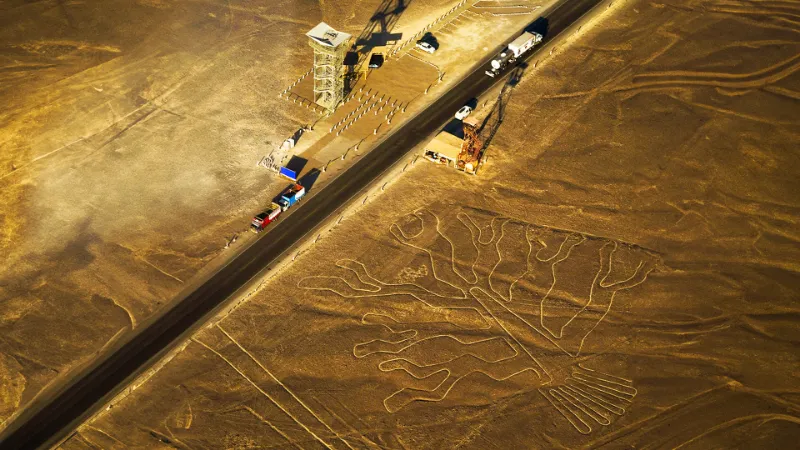
Image Source:unsplash.com
Astronomical Theory
German archaeologist Maria Reiche believed that the Nazca lines were a sort of “book of the stars,” a terrestrial representation of celestial patterns. She suggested that the lines corresponded to astronomical phenomena and were used to mark the paths of the sun, moon, or certain stars. These geoglyphs may have served as tools for ancient Nazca people to conduct astronomical observations and predict seasonal changes.
Religious Theory
Some scholars argue that the Nazca lines were part of religious rituals. Shamans of the ancient Nazca ancestors might have performed sacrificial ceremonies near these patterns, praying for rain, a bountiful harvest, or protection. These geoglyphs might have been used in practices aimed at communicating with deities or spirits.
Water Source Theory
Certain researchers believe the Nazca lines had directional purposes, pointing to underground water sources or subterranean rivers, possibly related to ancient water systems. In such an extremely arid region like the Nazca Desert, finding water sources was crucial. These patterns may have marked the locations of underground water sources, aiding desert inhabitants in locating and managing precious water resources.
Light Painting Theory
Experts from Dresden University in Germany, who studied the Nazca lines, discovered that the electrical conductivity of the lines is 8,000 times higher than that of the surrounding sand and rocks. They hypothesized that the Nazca lines might have functioned as giant light paintings displayed through some kind of electrical system on the ground, visible from space.
Each of these theories is supported by certain evidence, yet none can fully explain the purpose of the Nazca lines. Researchers continue to explore and seek to unravel the truth behind this ancient enigma.
Learn More About Theories on the Nazca Lines
Are the Nazca Lines Related to Aliens?
With the deepening research of archaeologists, tomb-like ruins have been found near Nazca, and peculiar skulls have been unearthed. These skulls have human-like faces but are particularly elongated, measuring twice the length of normal human skulls. Their brain capacity is twice that of a normal human. DNA tests reveal that these skulls contain some human DNA, but a significant portion is neither human nor any known Earthly creature’s DNA. This discovery has fueled numerous speculations about alien involvement.
Based on various archaeological and scientific evidence, Grandmaster JinBodhi has made his own speculations:
Speculation One: The Nazca Lines Might Be Navigational Markers for Aliens

Grandmaster JinBodhi believes that the Nazca Lines might be signposts for aliens, akin to modern road signs, providing navigational information for extraterrestrial visitors. He hypothesizes that these patterns could be markers on Earth, helping alien lifeforms identify and locate Earth.
Speculation Two: The Nazca Lines Could Be an Experimental Base for Aliens on Earth

Grandmaster JinBodhi speculates that the Nazca Lines might have been an experimental base for aliens on Earth. Whenever they created a new creature, they would draw these animal patterns on the ground as records and displays of their experimental results.
Additionally, Grandmaster JinBodhi mentioned that the creatures depicted in the Nazca Lines not only enriched Earth’s biodiversity but also played crucial roles in the ecosystem:
Hummingbirds: Having existed in South America for over 22 million years, hummingbirds interact with more than 1,500 flowers daily, significantly contributing to pollination. Moreover, their flight capabilities have inspired the development of bionic technologies, especially in drone and aircraft design.
Andean Condor: This vulture, which has been around for over 30 million years, feeds on carrion and acts as a scavenger in the ecosystem. They help process dead animal carcasses, preventing the spread of diseases and maintaining ecological balance.
Monkeys: Due to their agility and strong climbing abilities, monkeys are natural seed dispersers. Historically, monkeys have also been used to prevent plagues. For example, in ancient cavalry units, monkeys could help avoid horse plagues.
Spiders: Although many people fear spiders, their webs capture a large number of insects, reducing the spread of plagues. In Inca culture, spiders were seen as messengers of the gods, capable of bringing good luck and averting disasters.
Whales: As giants of the ocean, their excrement is vital for the growth of marine algae. Algae provide 50%-80% of the Earth’s oxygen and can process about half of the carbon dioxide. Thus, protecting whales is essentially protecting the Earth.
Learn More About the Symbolic Meaning of the Nazca Lines
Speculation Three: The Nazca Lines Might Be an Alien Station for Receiving Cosmic Energy

Grandmaster JinBodhi suggests that the Nazca Lines might be a station used to receive energy from the cosmos and transmit information. He believes these patterns could recharge and replenish energy for extraterrestrials and transmit messages or even physical substances, similar to modern communication and material transmission technologies.
The Nazca Lines are one of the most mysterious archaeological wonders in human history. Their vast scale and intricate patterns continue to capture the attention of countless people. Regardless of their purpose, the Nazca Lines demonstrate the wisdom and creativity of the ancient Nazca culture. Their existence deepens our awe and curiosity about ancient civilizations. Perhaps future scientific research and archaeological excavations will unveil more truths about this ancient civilization and its potential connection to extraterrestrial life.
Learn More: The Long-Skulled Human Skeletons
Machu Picchu: An Ancient Civilization Beyond Time
The Time-Space Portal of Lake Titicaca
Bodhi Meditation | Embark on a Cosmic Exploration Journey and Explore Infinite Possibilities
The mystery and grandeur of the Nazca Lines allow us to feel the endless wonders of nature. In our quest to understand the unknown, we should hold a sense of reverence, respecting the diversity and mystery of all things in the world. If you are interested in topics related to exploring the unknown world, you are welcome to follow Grandmaster JinBodhi’s YouTube channel and join him in uncovering the stories behind these mysterious phenomena.
More Videos on Mysterious Topics
Incredible Architecture | Machu Picchu
Explore the Amazing Secrets of Potatoes: From Potato Dishes and Benefits to Unveiling Their Origins